
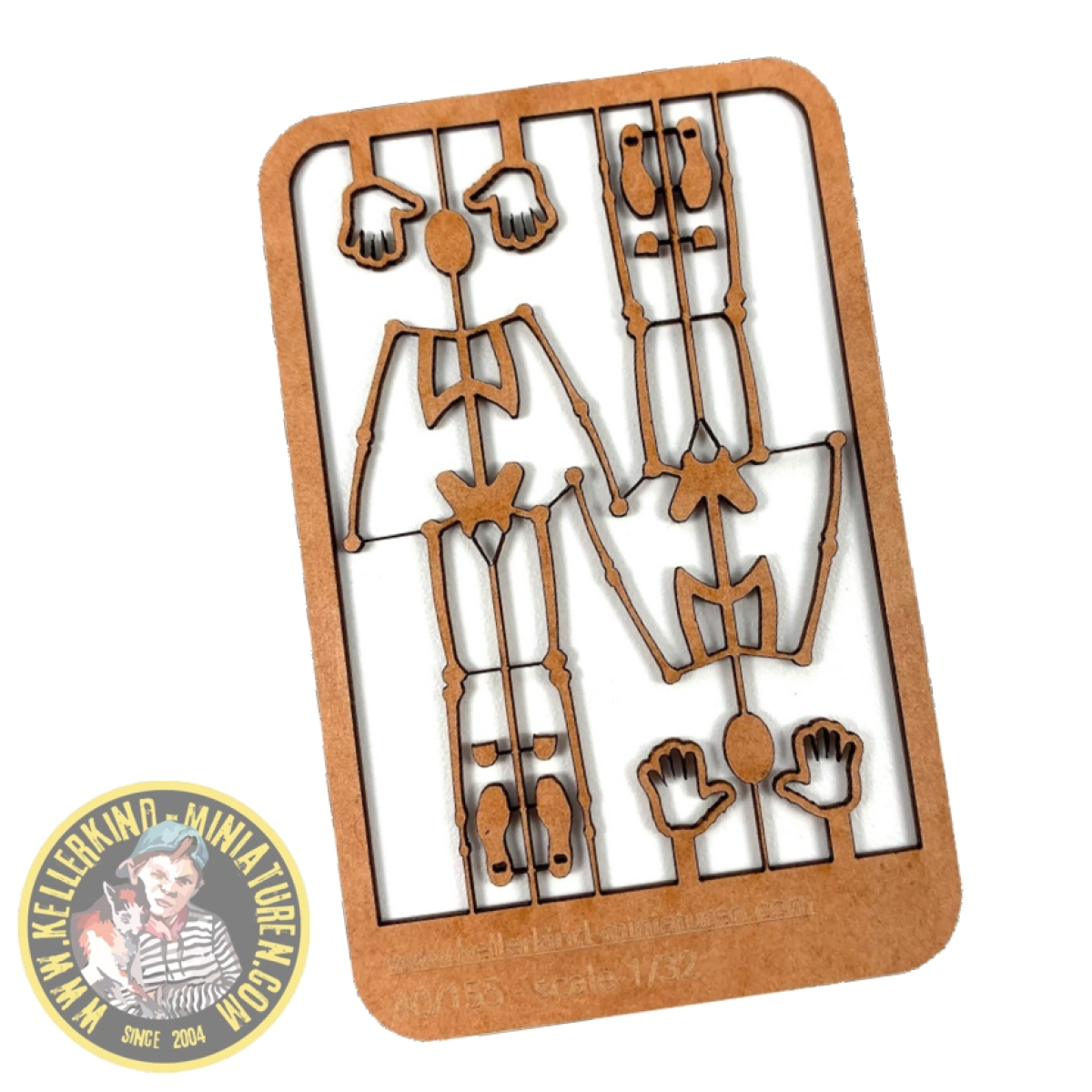
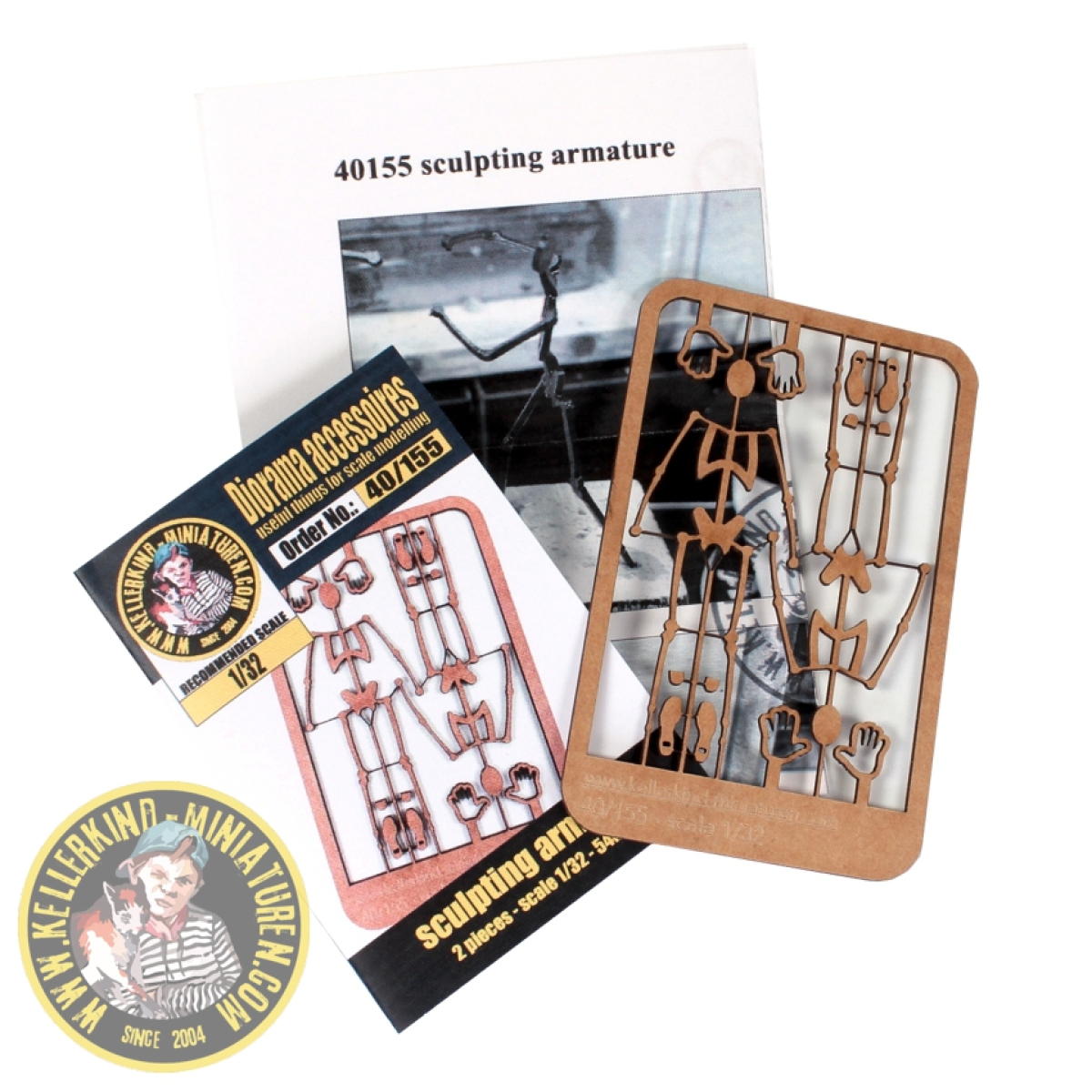


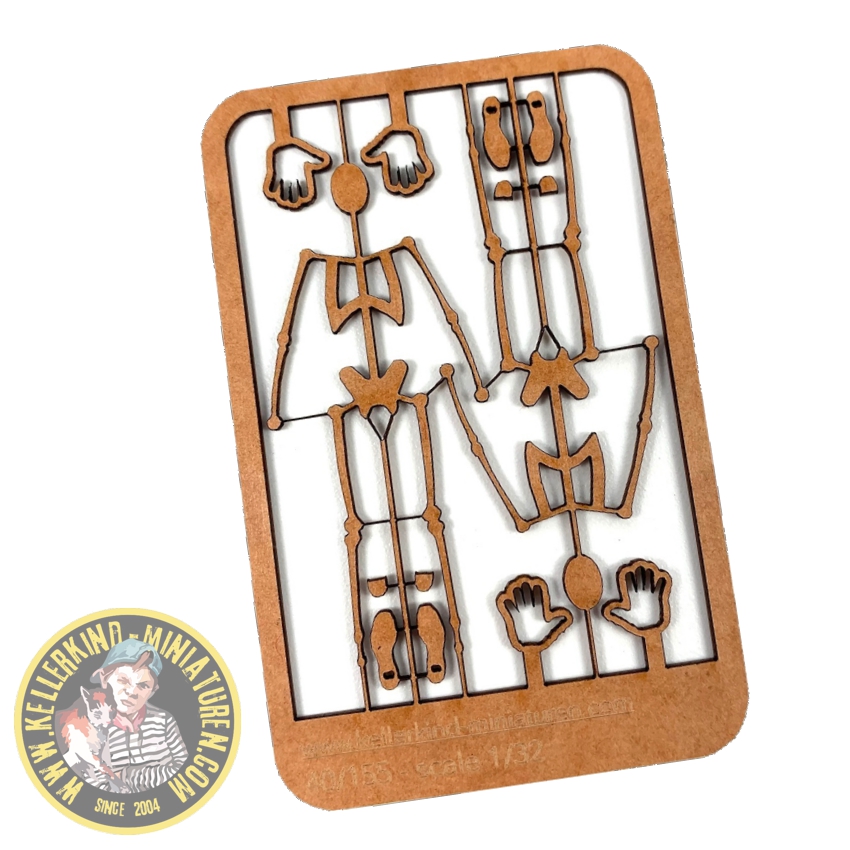
Sculpting armature
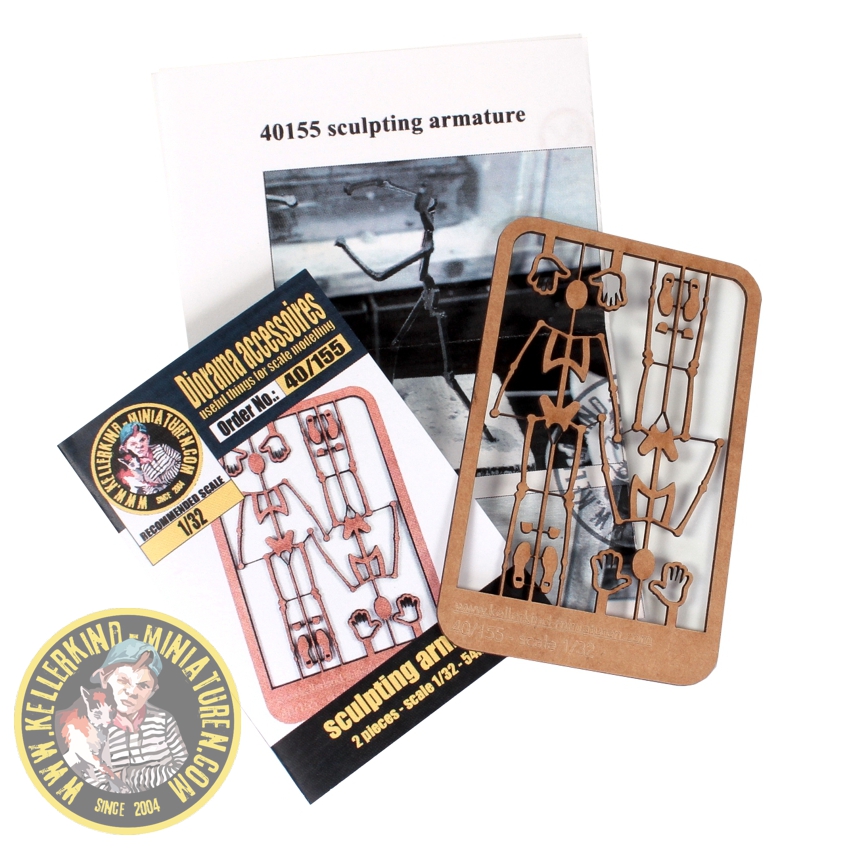
NEW
Scale: 1:32 / 54 mm
Parts: 1
Material: Pressboard cardboard
Unbuilt and unpainted kit
Parts:
2 armatures
How is it done?!?
- Cut the armature out of its frame using scissors or a craft knife.
- Bend it into the correct pose using a pair of pliers.
- Pierce two holes into a small block of balsa wood (not included) to mark the position of the legs.
- Insert the armature into the base and secure it with superglue. (The included templates for hands and shoe soles are provided to help you check the dimensions later during the sculpting process.)
- Adjust the pose if necessary, then coat the armature several times with very thin (low-viscosity) superglue until it no longer absorbs any more adhesive.
- If necessary, glue a support wire (not included) into the back of the base and attach the other end to the back of the armature (using superglue).
- Coat the figure with a thin initial layer of modeling putty (e.g., BeesPutty); this serves as a "primer" for all subsequent work. If the putty does not adhere to the armature immediately, you can carefully brush it with a small amount of white spirit (mineral spirits). Allow it to air dry thoroughly afterward, as this process causes the BeesPutty to soften significantly.
- When applying additional layers of modeling putty, avoid applying excessive pressure. It is usually more effective to roll the putty into place using a rolling motion with a small round wooden stick.
- Once everything is complete, place the figure in an oven and bake it to cure the putty. Afterward, remove the support wire and fill in the resulting hole.